
Let’s Be Real: Your Phone is Ruining Your Sleep

Okay, friends, let’s have a little heart-to-heart. We need to talk about that glowing rectangle you hold closer to your face than you hold your significant other. You know the one. The one that blasts blue light into your retinas at 11:45 PM while you doom-scroll through videos of people power-washing driveways or baking sourdough bread. We all do it. I do it. You do it. But here is the hard truth: technology is the absolute enemy of a good night’s sleep.
We invite these devices into our most intimate spaces, and then we wonder why we wake up feeling like we went ten rounds with a chaotic caffeinated squirrel. We designed our bedrooms to be entertainment centers rather than recovery chambers. And that stops today. We are going to reclaim your sanctuary. We are going to build a fortress of solitude. Welcome to the guide on Designing Your Virtual Dreamtime: Creating a Tranquil, Tech-Free Bedroom.
Why do I call it “Virtual Dreamtime”? Because currently, your dreams are virtual. You are dreaming about other people’s lives on Instagram instead of having actual REM cycles. We are going to flip the script. We are going to design a room so comfortable, so analog, and so incredibly boring (in the best way possible) that your brain has no choice but to shut down and rest.
The Psychology of the ‘Tech-Free’ Zone
Before we start moving furniture, we need to move your mindset. Why does this matter? Your brain is a primitive organ trying to navigate a digital world. When you see blue light from a screen, your brain thinks the sun is up. It screams, “Wake up! There are berries to gather! There are tigers to avoid!” It suppresses melatonin, the hormone you desperately need to drift off. By keeping tech in the bedroom, you are effectively shouting at your biology to stay alert.
But it goes deeper than biology. It’s about anxiety. If your phone sits on your nightstand, part of your brain remains on ‘standby mode,’ waiting for that buzz, that ding, or that phantom vibration. You never truly disconnect. Creating a tech-free bedroom isn’t just a design choice; it is a mental health intervention. You are creating a physical boundary that says, “The world stops here.”
The Great Excavation: What Must Go?
This part will hurt. I promise you, the separation anxiety is real, but you must push through it. Look around your room right now. What has a plug? What has a screen? What connects to Wi-Fi? It needs to go. Yes, even the TV. Especially the TV.
I can hear you protesting already. “But I need the TV to fall asleep!” No, you don’t. You have conditioned yourself to pass out from exhaustion while stimulated by noise. That isn’t sleep; that is unconsciousness. There is a difference. Move the TV to the living room. Take the iPad to the kitchen. And the phone? The phone sleeps in the hallway, the kitchen, or the bathroom. Anywhere but next to your head. Buy a simple charging station and set it up outside the bedroom door. That is the border control checkpoint. No contraband beyond that point.
The Analog Hero: Rediscovering the Alarm Clock

Now that we evicted your smartphone, you have a legitimate logistical problem: “How will I wake up?” Enter the hero of our story: The Analog Alarm Clock.
Do you remember these? They don’t track your steps. They don’t notify you about emails from your boss. They do one thing: they tell time, and they wake you up. There is something incredibly grounding about a clock that just ticks. It removes the temptation to check the weather, the news, or your ex’s profile the second you open your eyes.
When shopping for this retro gadget, look for something with a “sweep” second hand. Why? because the “tick-tick-tick” of a cheap quartz movement can sound like water torture at 2 AM when you can’t sleep. You want silence. You want a gentle alarm, perhaps a gradual light alarm or a soft chime. Avoid the ones that sound like a submarine diving into a war zone. We want tranquility, not a heart attack.
Color Theory: Painting Your Way to Peace
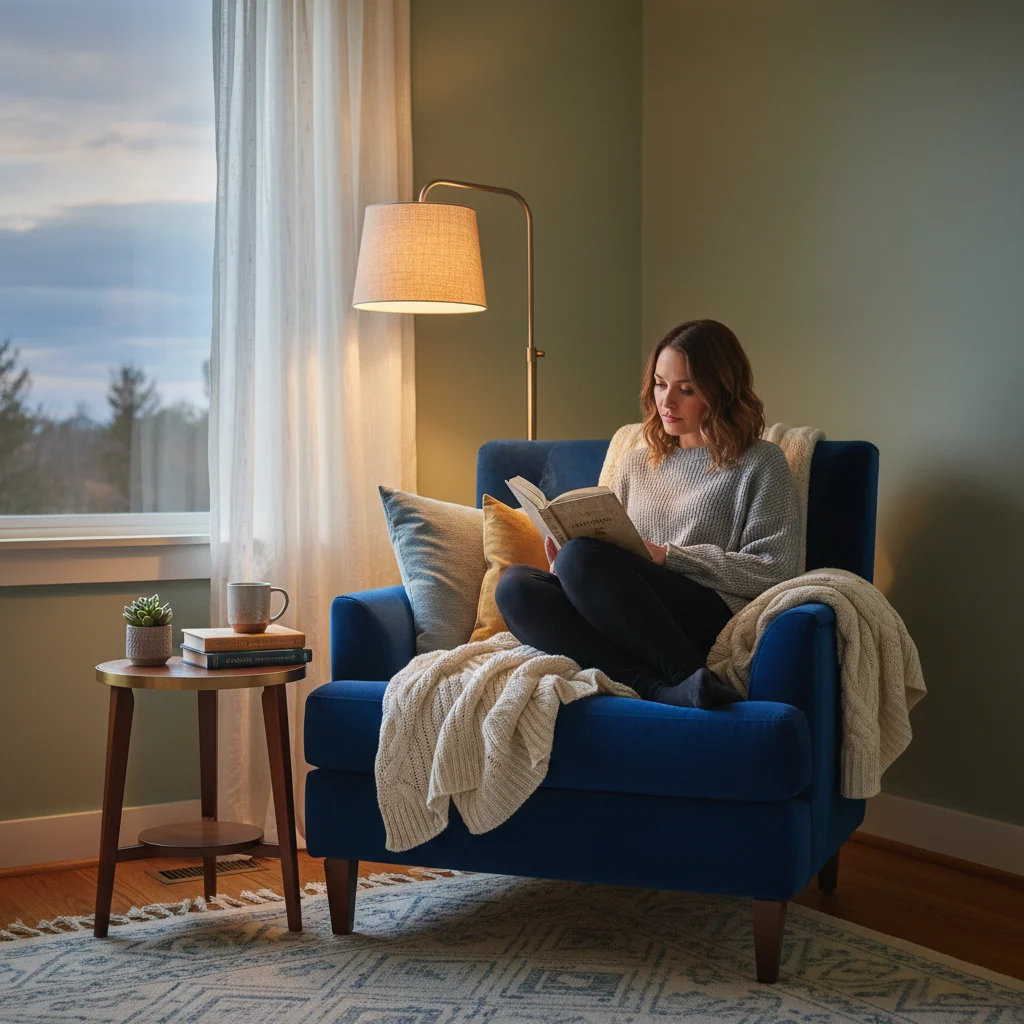
Now that the gadgets are gone, let’s look at the walls. If your bedroom is painted bright red, neon orange, or a stark, clinical white, you are sabotaging yourself. You need colors that lower your blood pressure just by looking at them. We are designing for Virtual Dreamtime, remember? The visual input should feel like a warm hug.
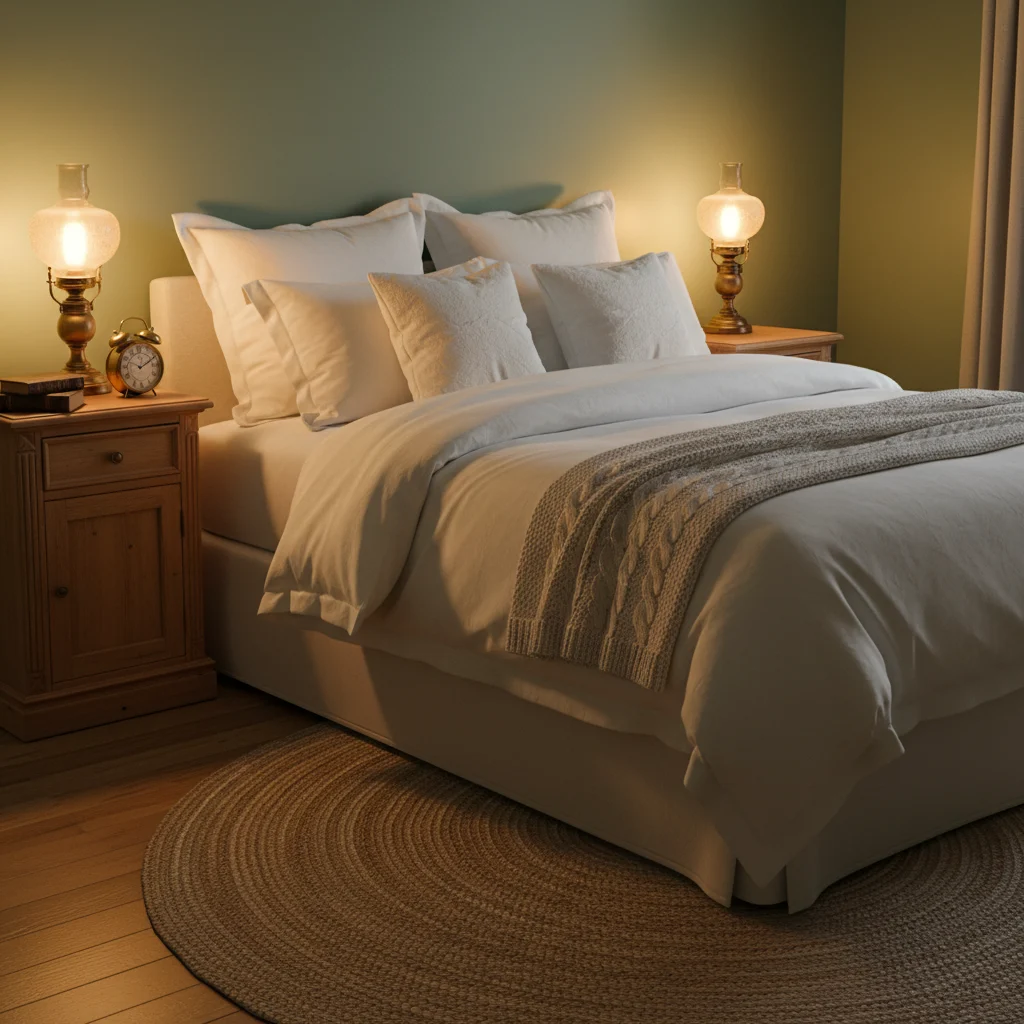
Consider the “Sage Green” family. Green connects us to nature. It feels organic, mossy, and quiet. It signals safety to our primal brains. If green isn’t your vibe, look at warm, earthy neutrals—think oatmeal, terracotta, or a soft, dusty blue. Blue is classic for sleep, but be careful; cool blues can feel chilly. You want a blue that has a little bit of grey in it. A moody, storm-cloud blue wraps around you and makes the room feel smaller and cozier.
Whatever you choose, buy a matte finish paint. Glossy paint reflects light. We don’t want reflections. We want absorption. We want softness.
Lighting: The Anti-Big-Light Crusade
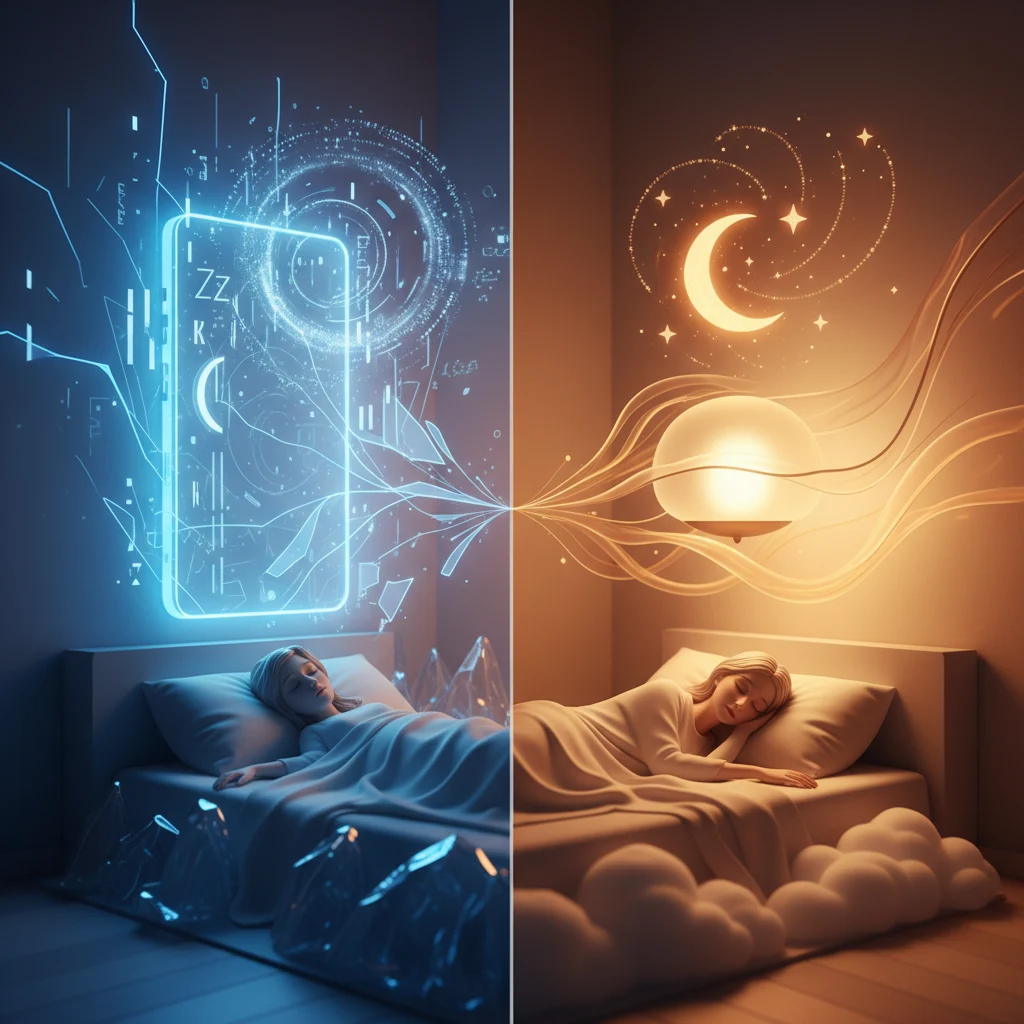
If you take nothing else from this rambling manifesto, take this: Never, ever use the ‘Big Light.’ You know the one. The ceiling fixture that blasts 6000 lumens of interrogation-room brightness into the center of the room. It is the enemy of vibe. It is the killer of romance. It is the destroyer of sleep.
Your tech-free bedroom requires layered lighting. You need lamps. Lots of them. Put a lamp on the nightstand. Put a floor lamp in the corner. Put a tiny accent lamp on the dresser. And crucial step: check the lightbulbs. You want “Warm White” or “Soft White” bulbs (2700K temperature). If the box says “Daylight” or “Cool White,” throw it in the trash. We are simulating a cave at sunset, not a hospital operating theater.
Pro-tip: Install dimmer switches on everything. Being able to lower the lights gradually as the evening progresses mimics the setting sun and triggers that sweet, sweet melatonin production we talked about earlier.
Furniture Layout: Feng Shui for the WiFi-Weary
How you arrange your furniture dictates how you feel in the room. In a tech-filled room, everything points toward the TV. In a Tech-Free Bedroom, everything should point toward rest. Your bed is the star of the show. Give it the respect it deserves.
Place your bed in the “command position.” This means you can see the door, but you aren’t directly in line with it. It’s a primal security thing. If you can’t see who is entering the cave, you can’t relax. Make sure you have clear walking paths. There is nothing less tranquil than tripping over a laundry basket or banging your shin on a cedar chest in the middle of the night.
Creating a Non-Digital Reading Nook
Since you won’t be scrolling through Twitter in bed, you need an alternative activity. Reading is the gold standard of pre-sleep rituals. If you have the space, carve out a dedicated corner for a reading nook. You don’t need a library wing; you just need a comfortable armchair, a small side table for your tea (decaf, obviously), and a dedicated reading lamp.
This creates a psychological separation. The chair is for winding down. The bed is for sleeping. By the time you move from the chair to the bed, your body knows exactly what time it is. You are training yourself like Pavlov’s dog, but instead of salivating at a bell, you are yawning at a duvet.
Textiles and Textures: Sensory Overload (The Good Kind)
Without the distraction of a screen, your other senses will wake up. You will suddenly notice if your sheets are scratchy or if your rug feels like a plastic mat. You need to invest in tactile luxury. This doesn’t mean spending a fortune; it means choosing materials that feel good against human skin.
Start with the bedding. Get natural fibers. Cotton percale for those who sleep hot and want that crisp hotel feel. Linen for a softer, lived-in texture that breathes. Flannel for the winter hibernators. Wash them weekly. There is no feeling on earth quite like sliding into fresh sheets with shaved legs (or unshaved legs, I don’t judge, just get in the sheets).
Layer the bed. Don’t just rely on a duvet. Add a weighted blanket. The pressure of a weighted blanket stimulates serotonin and reduces cortisol. It’s basically a heavy, non-judgmental hug that lasts all night. Throw a chunky knit blanket at the foot of the bed for texture. Add an area rug that your toes sink into when you wake up. We are building a nest here, people.
The Sound of Silence (or Fans)
Now that the TV is gone, you might notice the house makes noises. The fridge hums. The pipes creak. The neighbor’s dog has existential dread. Silence can be deafening if you aren’t used to it. Since we can’t use a phone app for white noise (remember: no phones allowed!), we go old school.
Get a mechanical fan. The consistent *whirrrr* of a fan is superior to any digital loop. It moves air, keeping the room cool (which is better for sleep), and it provides a consistent sound floor that masks the random bumps in the night. If a fan is too cold, buy a dedicated white noise machine. A physical one with buttons. Not a smart speaker that listens to your conversations. Just a box that makes a *shhhhh* sound. Simple. Effective.
The Nightstand Audit: Clutter Creates Chaos
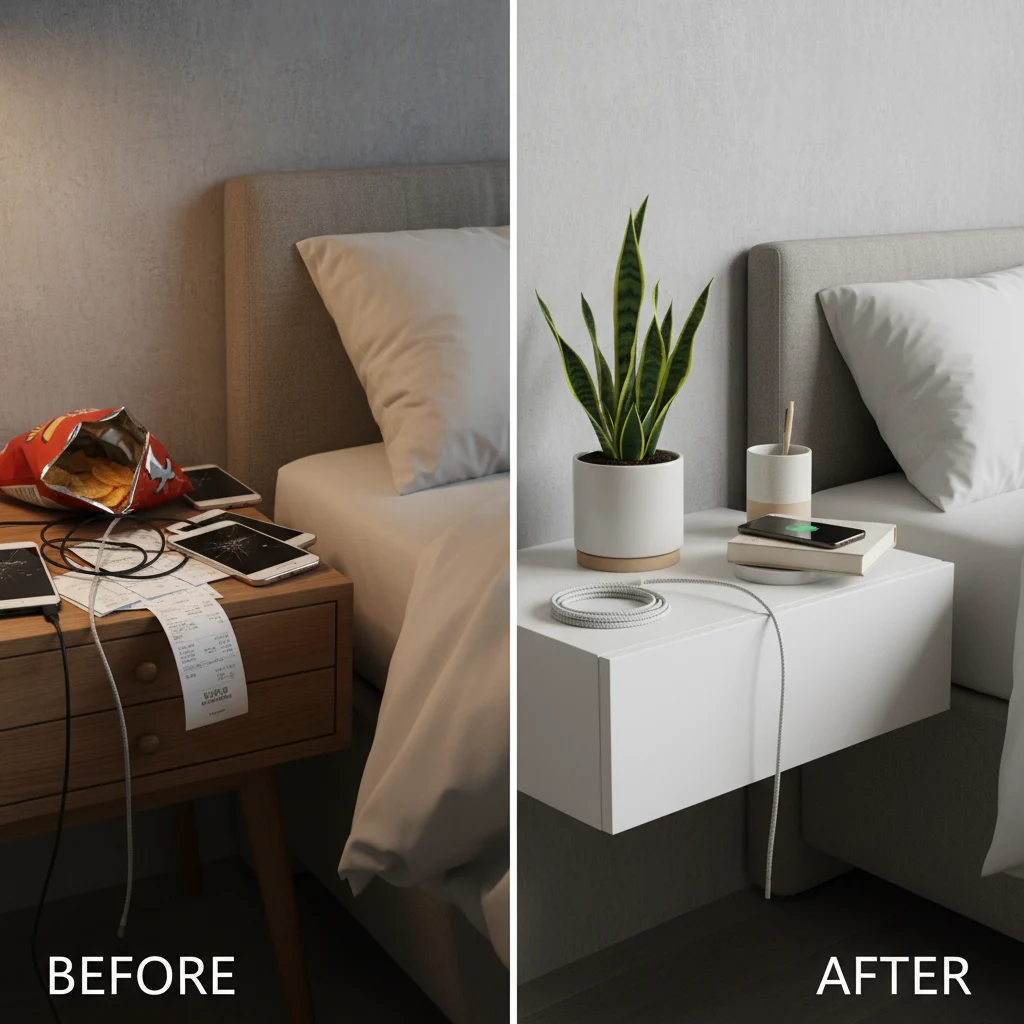
Look at your nightstand. What is on it? Receipts? Three empty water glasses? A half-eaten granola bar? A tangled mess of cables? Clutter is visual noise. It screams at your brain that you have unfinished business. Your nightstand in your Virtual Dreamtime sanctuary should be a shrine to minimalism.
Here is the approved list of items for a tranquil nightstand:
- One lamp (warm bulb, obviously).
- The analog alarm clock (our new best friend).
- One book (paper, not Kindle).
- A glass of water (use a coaster, we aren’t savages).
- Maybe a journal and a pen (for brain dumping).
That’s it. Clear the rest away. When you look at your bedside table, it should look like a calm invitation to rest, not a to-do list waiting to happen.
Replacing the Dopamine Hit: New Rituals
You have designed the room. It looks like a page out of a magazine. It smells like lavender (get a diffuser, by the way). But now you are lying there, staring at the ceiling, and your hands are twitching because they want to hold a phone. The withdrawal is the hardest part of this design process.
You need to replace the digital dopamine hit with an analog ritual. This is where the journal comes in. Instead of consuming content, create it. Write down three things you are grateful for. Or, simply “brain dump” every worry in your head onto the paper so you don’t have to carry it while you sleep. Once it is on the paper, it is tomorrow’s problem.
Read fiction. Non-fiction engages the “learning” part of your brain, which can keep you awake. Fiction engages the imagination, which is the gateway to dreaming. Read until your eyes get heavy. Do not fight it. Let the book drop on your face. That is the sign.
Maintenance: Don’t Let the Tech Creep Back In
Here is the danger zone. Two weeks from now, you will have a bad day. You will feel sick. You will think, “I’ll just bring the iPad in for one episode of The Office to comfort me.” Stop. Don’t do it. It starts with one episode, and suddenly the charger is back plugged into the wall, and the blue light is back, and the insomnia returns.
Protect this space aggressively. If you share the room with a partner, get them on board. Make a pact. If one of you smuggles a phone in, the other gets to pick the movie for date night (or some other high-stakes penalty). You have to treat this room as a sacred space. The rest of your house is for technology. The rest of the world is for technology. This one room—this 150 square feet of drywall and carpet—is the only place on earth where you are unreachable.
The Payoff: Why This Effort is Worth It
I know this sounds like a lot of work. Painting, moving furniture, buying clocks, fighting your own addiction. Is it worth it? Absolutely.
When you reclaim your bedroom from the tech giants, you reclaim your mornings. You wake up naturally, not in a panic. You stretch before you check email. You greet your partner before you greet your Twitter followers. You remember your dreams because you actually had them.
You are designing more than a room; you are designing a boundary. You are telling yourself that you are worthy of rest. You are worthy of silence. You are worthy of a break from the constant, screaming feed of information.
So, go buy that analog clock. Drag that TV out to the curb (or just the living room). Paint the walls sage green. Create your Virtual Dreamtime. Your notifications will still be there in the morning, I promise. But for tonight? Tonight, you just sleep.